

All HCCI Reports
HCCI’s original reports powered by #HCCIdata
-
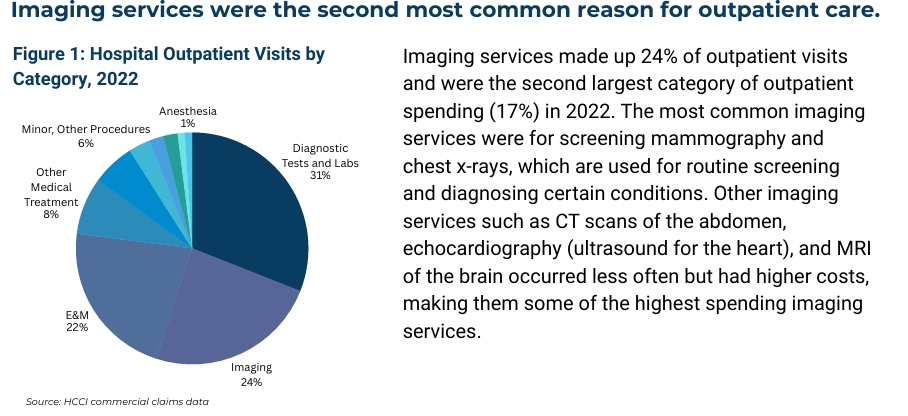
Issue Brief: Imaging Services are the Second Most Common Outpatient Service
 Read more: Issue Brief: Imaging Services are the Second Most Common Outpatient Service
Across several HCCI analyses, imaging services have emerged as commonly used services that account for a significant amount of spending, specifically in hospital outpatient department settings. This brief highlights the use and price of imaging services in hospital outpatient settings among people with employer-sponsored insurance (ESI).
-
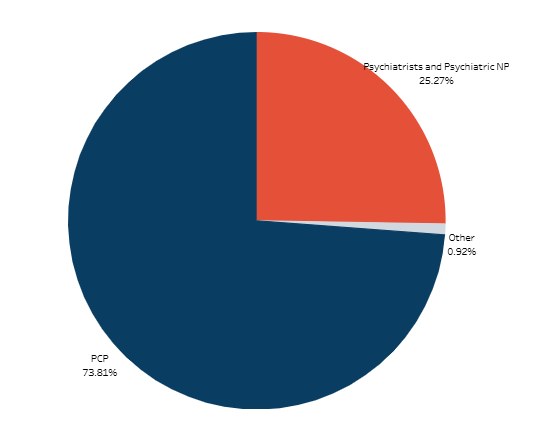
Primary Care Providers Prescribe the Majority of Antidepressants and Anxiolytics for People with Employer Sponsored Insurance
 Read more: Primary Care Providers Prescribe the Majority of Antidepressants and Anxiolytics for People with Employer Sponsored Insurance
The prevalence of depression and anxiety has increased steadily since 2019. Previous research, including a report from HCCI, has identified a concurrent steady increase in the use of antidepressant and anxiolytic medications. Previous studies have found that most people receive prescriptions for psychotropic medications from their primary care providers. This finding describes national prescribing patterns,…
-
Hospitals and Health Care Spending
 Read more: Hospitals and Health Care Spending
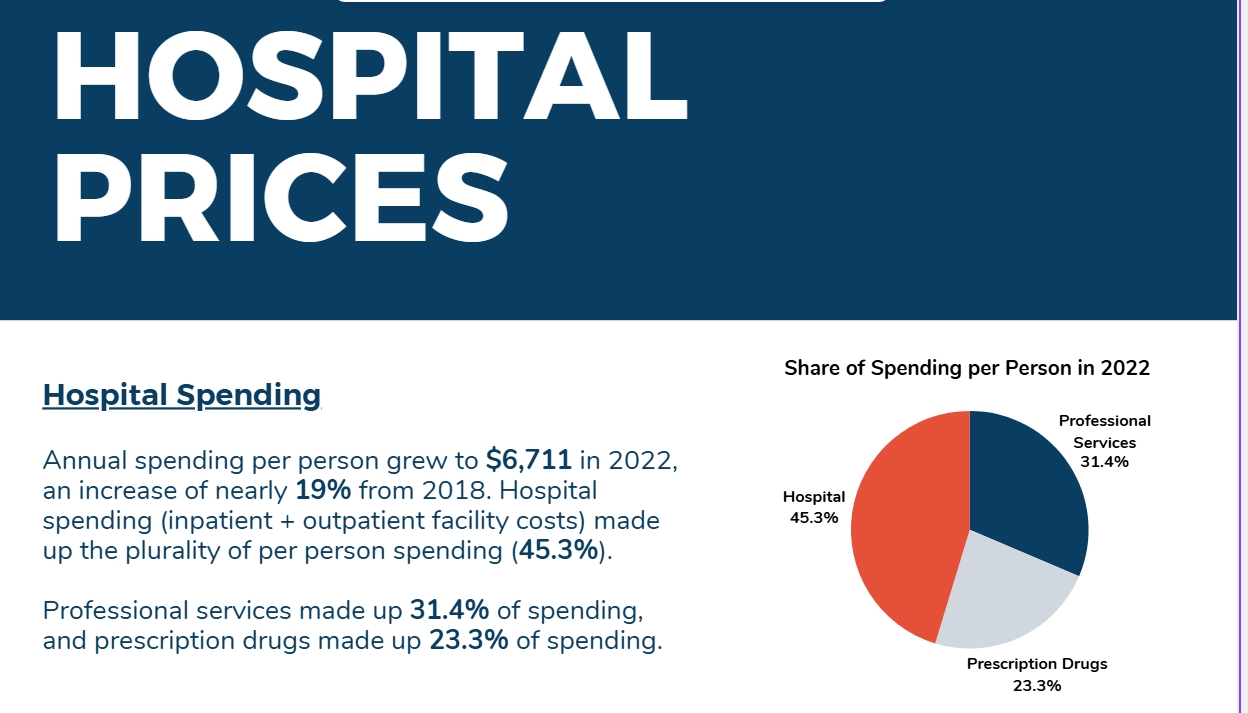
On March 18th, the House Energy and Commerce Health Subcommittee will convene a hearing in their series on health care affordability. This hearing will be focused on providers’ and hospitals’ impact on health care costs. HCCI has years of evidence that have evaluated health care costs and spending, including hospital spending, price, and use. Below are several resources that can improve policymakers’ understanding of…
-
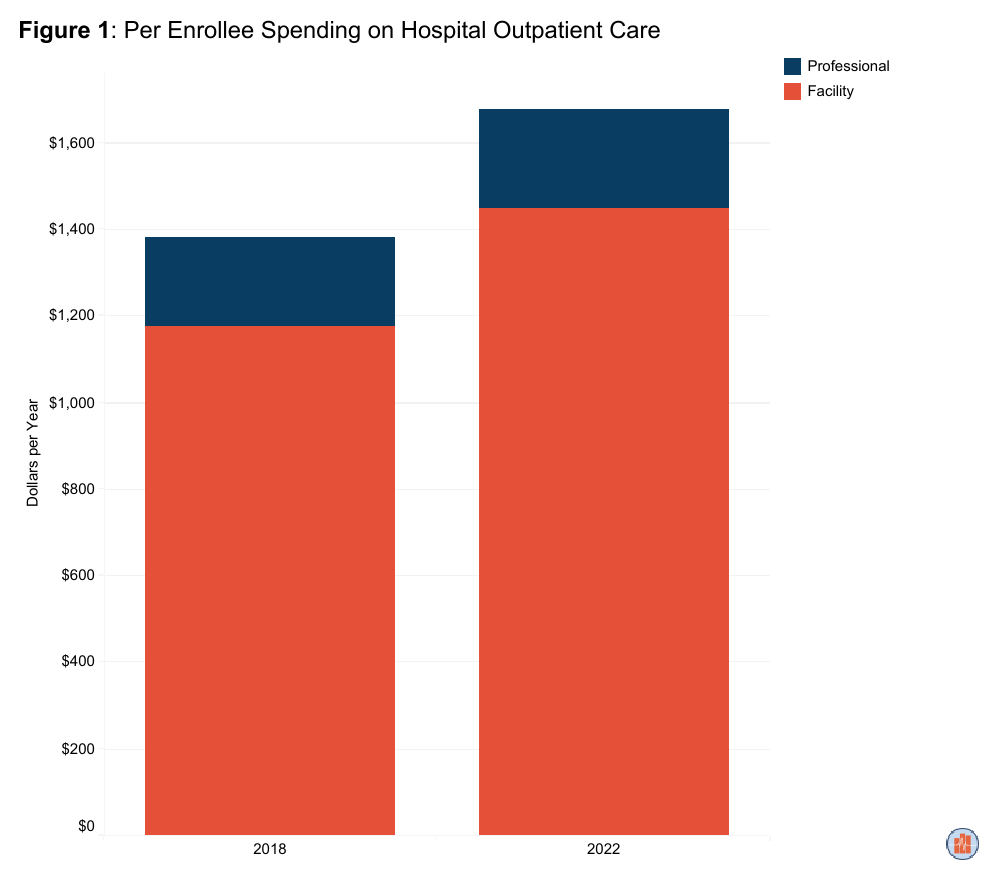
Assessing the Landscape of Hospital Outpatient Department Care
 Read more: Assessing the Landscape of Hospital Outpatient Department Care
Previous research by HCCI found that over half of all health care spending among people with employer-sponsored insurance (ESI) occurs in the hospital setting. Health care spending in hospitals comes from two types of medical bills; charges by hospitals, often called “facility bills,” and charges stemming from individual providers practicing in the hospital, sometimes called…
-
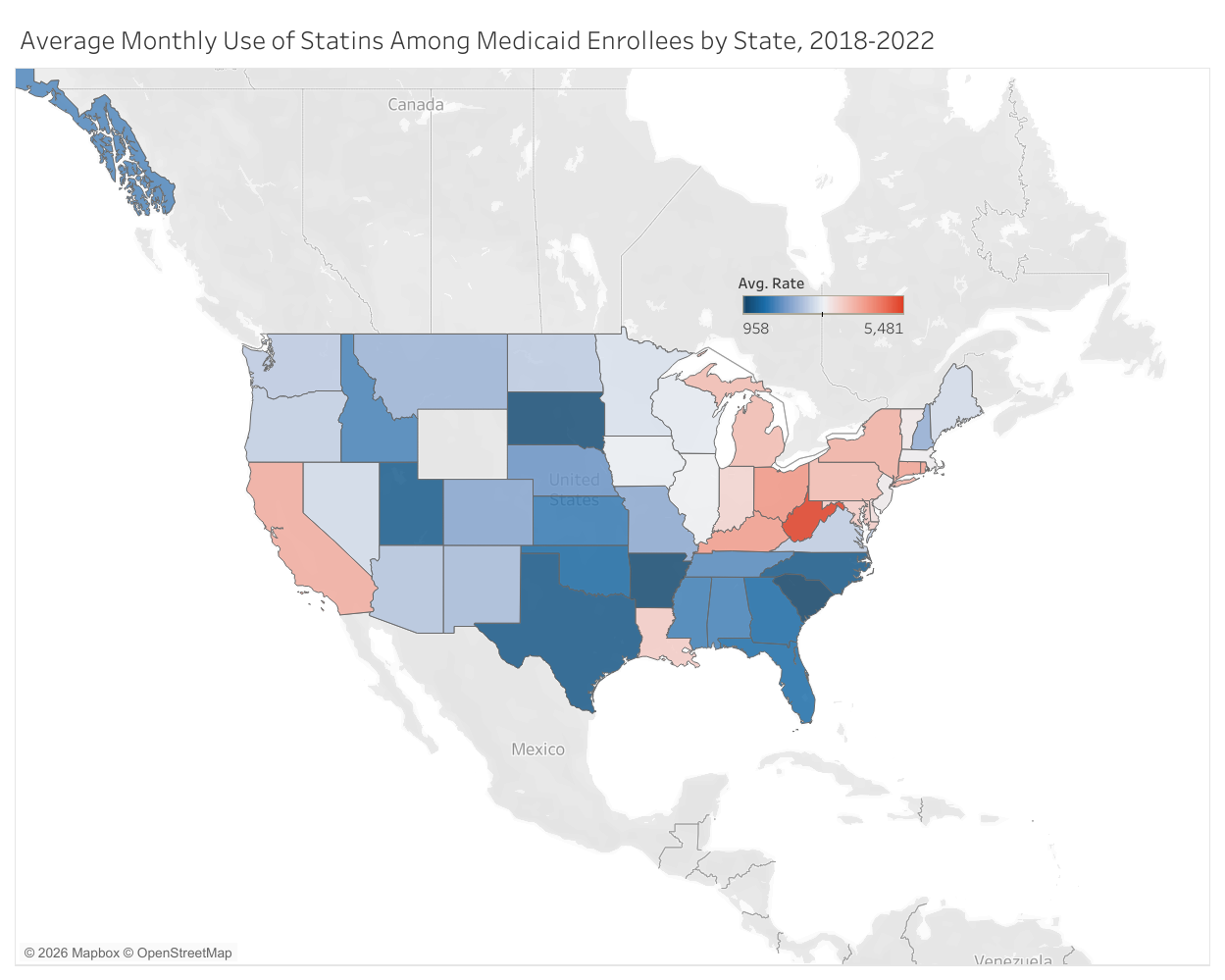
The Heart of Care: Statins Are The Most Common Cardiovascular Medications
 Read more: The Heart of Care: Statins Are The Most Common Cardiovascular Medications
Nearly half of adults in the US have high blood pressure or high cholesterol, which are key risk factors of heart disease – the leading cause of death in the US. HHS estimates about 30 million adults in the US have blood pressure at levels where medication use is recommended but are untreated. The American…
-
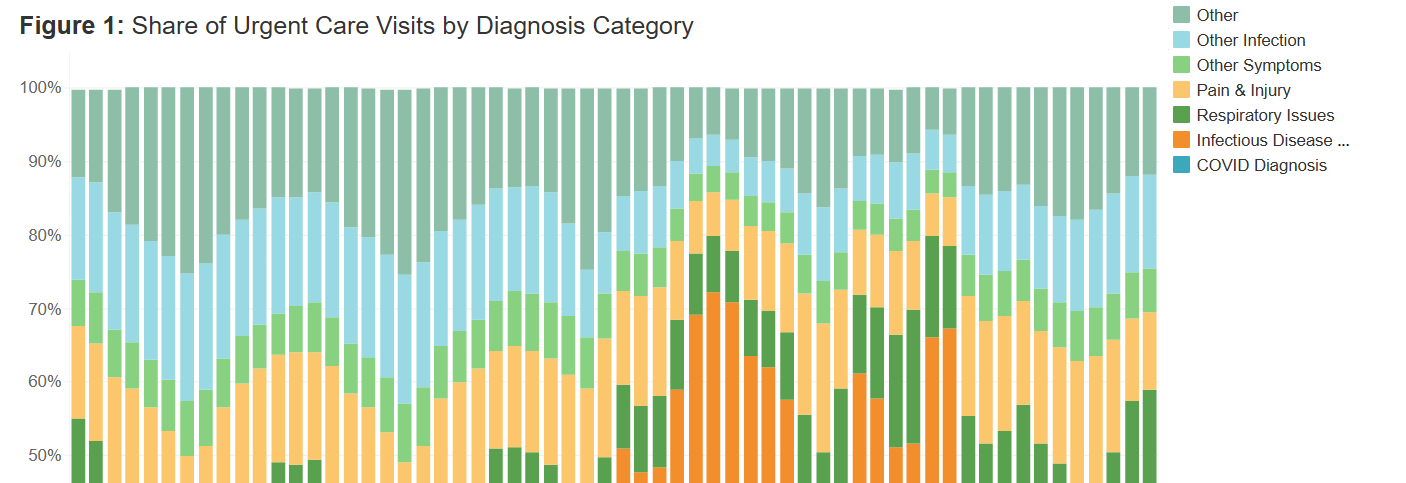
Respiratory-Related Illness is the Top Reason People Use Urgent Care
 Read more: Respiratory-Related Illness is the Top Reason People Use Urgent Care
HCCI analysis has shown that spending on urgent care services among people with employer-sponsored insurance (ESI) increased by over 50% from 2018-2022, primarily due to a 34% increase in the use of urgent care over that period. For example, from 2019 to 2020, the use of urgent care increased 21%, from 99 visits per 1,000…
-
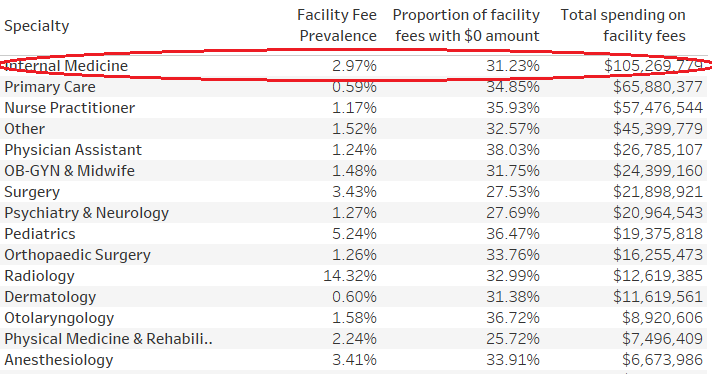
Most Office Visit Facility Fee Spending is on Internal Medicine
 Read more: Most Office Visit Facility Fee Spending is on Internal Medicine
Since CMS codified through regulation a single price Medicare will pay for select services, regardless of whether they occur in a hospital outpatient department (HOPD) or an independent office, site neutral payments policies have been seen as an opportunity to bring down health care spending. Subsequent policies exempted most existing HOPDs from the policy, limiting…
-
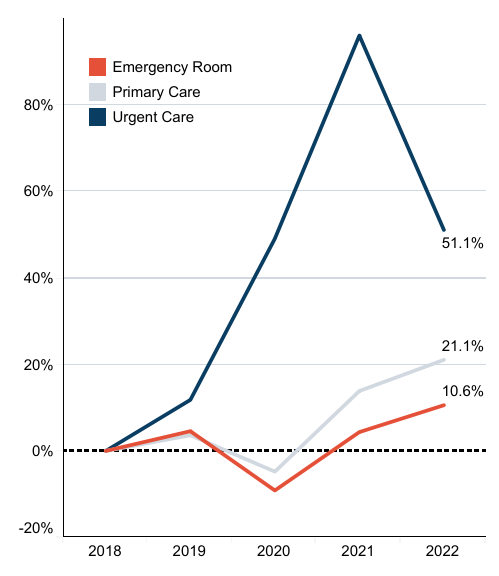
Urgent Care Spending Increased by 50% over 5 years driven by Higher Use
 Read more: Urgent Care Spending Increased by 50% over 5 years driven by Higher Use
Per person spending among people with employer-sponsored insurance grew nearly 19% from 2018 to 2022, a combination of 14% price growth and 4% utilization growth. This trend reflects that prices primarily have been responsible for health spending increases over this period. Spending on urgent care grew at a substantially faster rate (more than 50%) from…
-
Why is Health Care so Unaffordable?
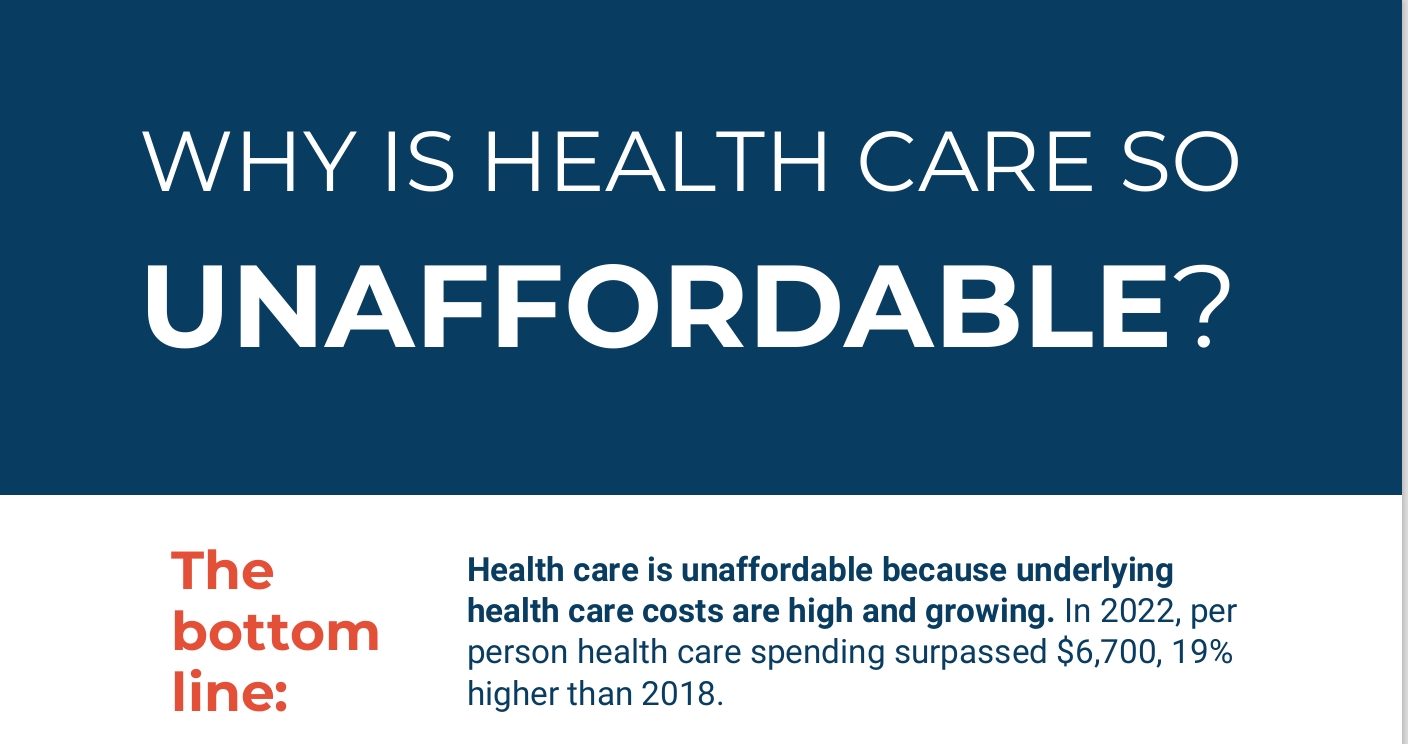 Read more: Why is Health Care so Unaffordable?
On January 22, 2026, the Health Subcommittee of the House Energy and Commerce Committee and the House Ways and Means Committee convened a hearing with testimony from the nation’s health insurance CEOs to understand the core drivers working against health care affordability. Years of HCCI research show that the real driver of why health care…
-
The Missing Piece: Why Employers Still Can’t Solve The Health Care Puzzle
 Read more: The Missing Piece: Why Employers Still Can’t Solve The Health Care Puzzle
A new discussion in Health Affairs written by Katie Martin and Shawn Gremminger explores the challenges employers face in accessing their data.Until information exists in a user-friendly format and employers can get their own detailed claims data, actionable plan design changes to lower health care costs will remain out of reach for many employers. To…